
A short story about Pixelarticons
It was December 31st, 2014, and I was sitting in front of Adobe Illustrator, surrounded by hundreds of pixel art icons I'd been creating. As a young designer and frontend developer, I had noticed something: while pixel-style icons existed, they were almost exclusively designed for games and entertainment. There was a gap; a need for pixel art icons that could work in clean, modern interface design.
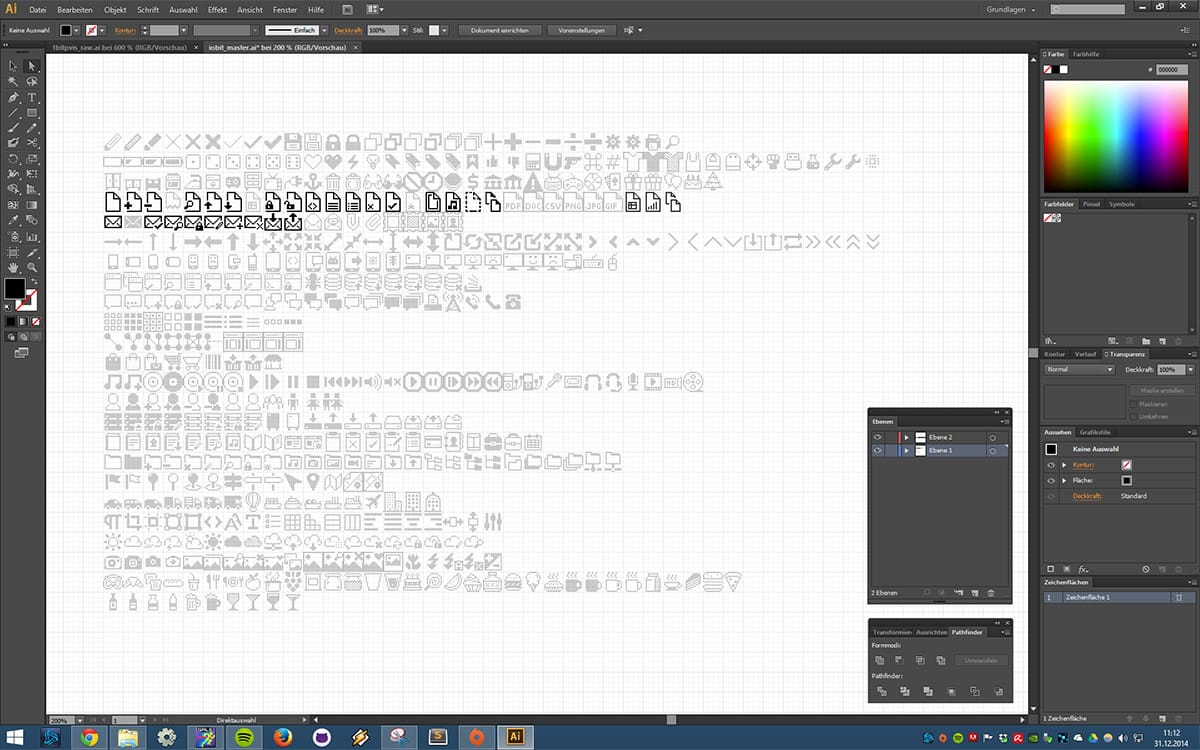
I wanted to create something that I felt was missing. So I started designing pixel icons; first in a dedicated pixel art editor, then moving to Illustrator (this was before Sketch and Figma became the standard). Over time, I switched to these modern tools as they made creating and managing a large icon set much easier.
One of the biggest challenges I discovered early on was scaling. When you create vector icons with a pixel art aesthetic, you can't just scale them to any size. If your base is 24px, you can only scale to 12px, 48px, 72px; multiples of the base size. Otherwise, they look mushy and lose that crisp pixel effect. But once you understand this constraint from the beginning, it works beautifully. It's a feature, not a bug.
What keeps me passionate about pixel art icons is their timeless quality. As technology pushes toward higher and higher resolutions, pixel art remains a reminder of digital design's fundamental origins; when constraints were tighter and capabilities were limited. In a world full of sterilized, smooth vector icons, pixel art connects us back to the atoms of digital design: the pixels themselves. Every monitor is made of pixels, but they've become so dense we don't see them anymore. Pixel art makes that foundation visible again.
Today, Pixelarticons has grown to 4032 icons across 4 style variants — every one designed on the same 24x24 grid. They're for the websites and apps that want to look like nothing else on the web. But more than that, they're a celebration of where digital design came from; and a reminder that sometimes, constraints lead to the most distinctive and memorable work.
